

Digital identity is presented as an administrative solution to modern life, but the conversation has grown far beyond technology, convenience, or faster verification. This edition examines the European Union and United Kingdom approaches and asks whether digital ID systems are creating new forms of participation while simultaneously redefining the relationships among citizens, governments, and private institutions. Enthusiasm around efficiency often receives more attention than difficult questions about power, consent, exclusion, surveillance, and autonomy. Digital ID is increasingly becoming a constitutional issue disguised as a technical one, and the consequences deserve much closer scrutiny than current public discussions often allow.

The Honest Truth about Digital IDs
The subject of digital identity (“Digital ID”) resonates with everyone because, at some point, we have all had to prove who we are, and we will eventually need to do so more often as public life and commerce migrate into electronic systems that demand confidence in our credentials.
We need to journey through the current state of digital ID in the European Union and the United Kingdom, as they are actively developing this infrastructure. Indeed, the subject is controversial because it sits at the junction of personal autonomy, privacy, government authority and commercial convenience, but it needs to be addressed objectively.
The European Union has spent years developing a framework for digital ID wallets that emphasises user control and cross‑border compatibility, while the United Kingdom is proposing a national digital ID scheme that has triggered a widespread public debate.
In this newsletter edition, we will look at the legal frameworks, the promises of convenience and efficiency, the technical and governance innovations such as zero‑knowledge proofs, and the deep concerns about surveillance and cultural acceptance.
The European Union: The Right to a Digital Identity
The European Union laid the foundation for digital IDs with Regulation (EU) No 910/2014 on electronic identification and trust services, commonly referred to as the eIDAS Regulation. In April 2026, the Regulation was amended by Regulation (EU) 2024/1183, which created what is now known as the European Digital Identity Framework.
The legal framework establishes that everyone in the EU has the right to a digital identity under their sole control, enabling them to exercise their rights in the digital environment and participate in the digital economy. It also sets out the requirements for qualified trust service providers.
At the centre of this framework are the European Digital Identity Wallets.
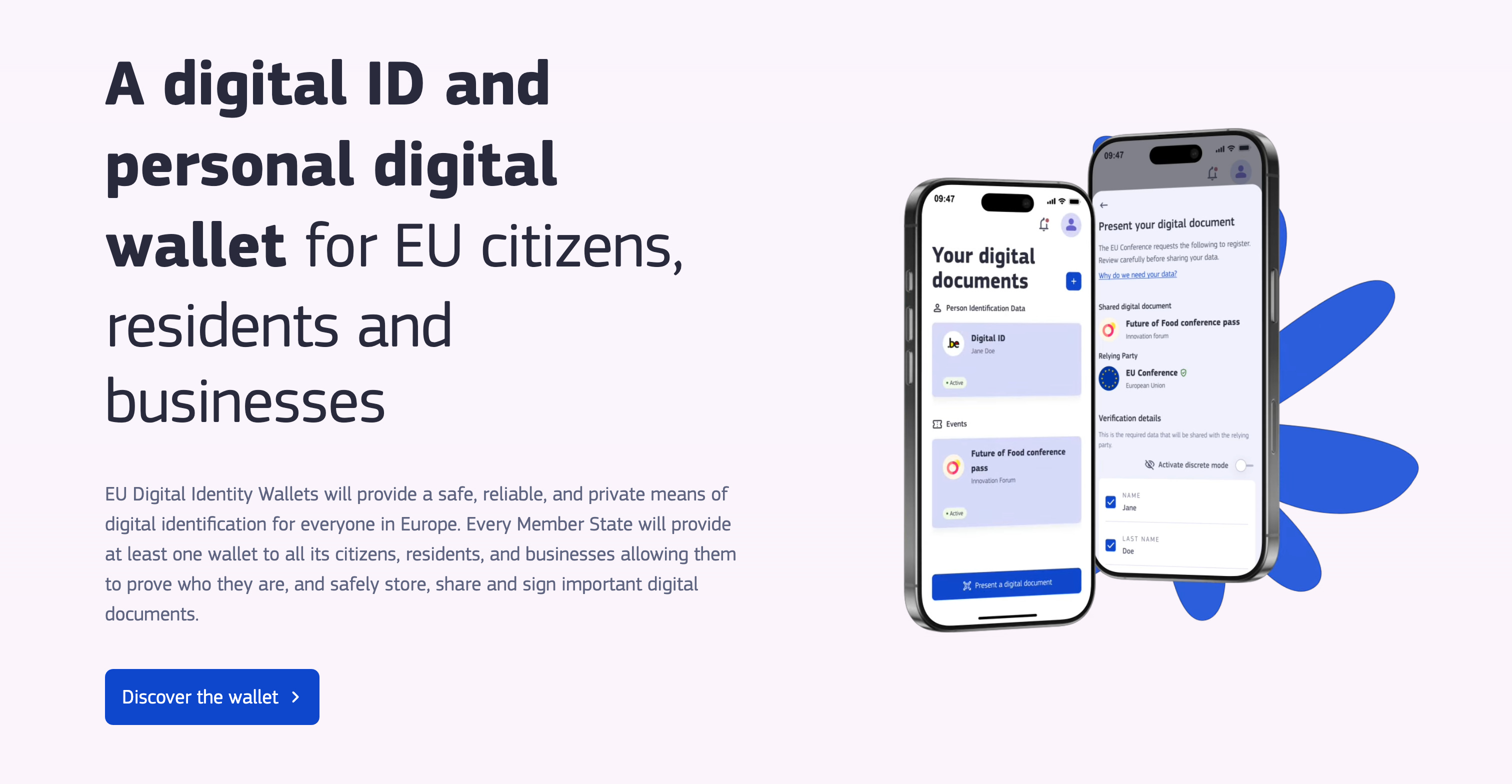
These wallets allow natural (individuals) and legal persons (e.g., companies) to access services across Member States while ensuring the protection of personal data and privacy through secure digital identification.
This is an ambitious project on the surface. A common identity infrastructure that spans national boundaries, yet remains under the control of the individual, hopefully.
The official European Commission description of the Digital Identity Wallet emphasises its functionality.
The wallet is intended to enable users to access: